
Scientific committee 2023
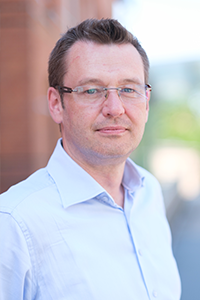
Michał Ślęzak, Ph.D. Head of the Research Group of Astrocyte Biology at Łukasiewicz – PORT from October 2020.
He received the Ph.D. at the Louis Pasteur University in Strasbourg and accomplished postdoctoral training in Inst. Pharmacology PAS in Cracow (Young Investigator Award, Polish MSHE) and in VIB, KU Leuven (Marie-Curie Intra-European Fellowship). In 2016, he won a prestigious competition at BioMed X Institute to lead a team sponsored by Boehringer Ingelheim. The team led by Ślęzak, Ph.D., focuses on the role of astrocytes in brain physiology and pathology.
“In recent years, we discovered aberrations in the molecular program of astrocytes elicited by chronic stress in rodents. Likewise, the transcritpional analysis of post-mortem human brain samples provided evidence for the impairment of fundamental functions of astrocytes in depression. Currently, the team combines genetic manipulations with state-of-the-art functional imaging to investigate the contribution of astrocyte-specific pathways to neurobiological symptoms of psychiatric diseases”.
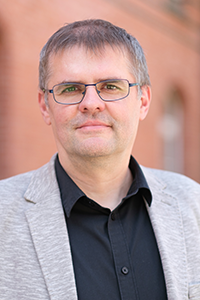
Witold Konopka, Ph.D. – Head of the Research Group of Neuroplasticity and Metabolism at Łukasiewicz – PORT from March 2021.
He received the Ph.D. at Nencki Institute in Warsaw and accomplished postdoctoral training at German Cancer Research Center (DKFZ), Heidelberg (Guenther Schuetz lab). From 2012 he ran the Laboratory of Animal Models and in 2014-2018 he was a deputy director for scientific affairs at the Nencki Institute.
“In the PORT Research Group, we study the precise mechanisms that regulate peripheral metabolism by the brain. We focus on regulation of eating – especially the feeling of hunger and satiety. We are interested in how neurons modify their activity in response to both internal and external signals, informing the brain of such physiological states. Understanding these phenomena will help in the fight against eating disorders such as anorexia and the pandemic of the modern world – obesity”.
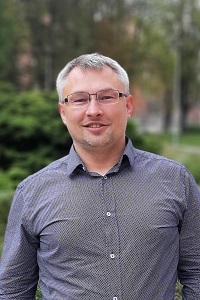
Tomasz Prószyński, Ph.D. – Head of the Research Group of Synaptogenesis at Łukasiewicz – PORT from February 2020.
He received the Ph.D. at the Max Planck Institute in Dresden (Kai Simons’ lab) and accomplished postdoctoral training at Harvard University (Joshua Sanes’ lab). In 2013-2020, he was leading a Laboratory of Synaptogenesis at the Nencki Institute where he was a member of the Scientific Council for two cadencies. Co-organizer of European Muscle Conference, Neurons in Action, and „Actin and actin-binding proteins in health and diseases 2022”. His recent publication (Rojek K. et al., Plos Biology 2019) has been awarded the Konorski Award for the best publication in neuroscience performed predominantly in Poland.
“Laboratory of Synaptogenesis studies molecular mechanisms that regulate neuromuscular junctions in the peripheral nervous system as well as synapses and neuronal organization in the brain. We are particularly interested in understanding the function of the Anigiomotin family of proteins and the Hippo pathway signaling in the central nervous system”.
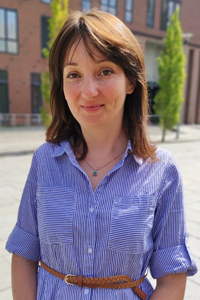
Agnieszka Krzyżosiak, Ph.D. – Head of the Research Group of Mechanisms of Neurodegeneration at Łukasiewicz – PORT from February 2023.
Agnieszka completed her PhD research at The Institute of Genetics and Molecular and Cellular Biology (IGBMC) in Strasbourg, France. She next accomplished the EMBO and HFSP funded postdoc at the Medical Research Council Laboratory of Molecular Biology (MRC LMB) in Cambridge, UK followed by the translational development of her scientific research in a spinoff biotech startup.
Agnieszka’s lab is interested to understand how protein quality control (PQC) deregulation contributes to neurodegeneration. In her previous research, together with her colleagues, Agnieszka showed that PQC can be targeted for the therapeutic benefit against protein accumulation – an approach currently developed clinically. Building on that, with the use of patient-derived models, the aim of the lab is to scrutinize the PQC pathways in neurodegeneration in the aim to identify novel treatment strategies.