

Scientific committee
Meet our scientific committee – a group of distinguished experts who guide the conference’s academic direction. Their experience and leadership ensure the highest quality of oncology-focused presentations and discussions. Learn more about the professionals shaping this year’s program.

Dr. hab. Grzegorz Chodaczek
Senior Leader of the Immunotherapy Group at Łukasiewicz – PORT
Graduated from the Wroclaw Medical University in 2001, where he studied at the Faculty of Pharmacy. In 2007, he received his PhD degree in immunology from the Institute of Immunology and Experimental Therapy in Wroclaw, Poland. Between 2005 – 2011 he was a research associate at the University of Texas Medical Branch at Galveston and then a postdoctoral fellow at the University of Texas MD Anderson Cancer Center in Houston, TX, in the Department of Immunology.
Additional information
His postdoctoral project involved intravital imaging of the immune system during wound healing and cancerogenesis. In 2011, he started a new position as microscopy core manager and instructor at La Jolla Institute for Immunology, San Diego, CA. Since 2014, he has worked as the Head of Bioimaging Laboratory at Łukasiewicz Research Network – PORT Polish Center for Technology Development. His research interest is in visualizing the immune cell activity in tissues, including the cancer microenvironment.
Dr. hab. Grzegorz Chodaczek
Senior Leader of the Immunotherapy Group at Łukasiewicz – PORT
Graduated from the Wroclaw Medical University in 2001, where he studied at the Faculty of Pharmacy. In 2007, he received his PhD degree in immunology from the Institute of Immunology and Experimental Therapy in Wroclaw, Poland. Between 2005 – 2011 he was a research associate at the University of Texas Medical Branch at Galveston and then a postdoctoral fellow at the University of Texas MD Anderson Cancer Center in Houston, TX, in the Department of Immunology.
Additional information
His postdoctoral project involved intravital imaging of the immune system during wound healing and cancerogenesis. In 2011, he started a new position as microscopy core manager and instructor at La Jolla Institute for Immunology, San Diego, CA. Since 2014, he has worked as the Head of Bioimaging Laboratory at Łukasiewicz Research Network – PORT Polish Center for Technology Development. His research interest is in visualizing the immune cell activity in tissues, including the cancer microenvironment.

Dr. hab. Marek Wagner
Leader of the Research Group of Innate Immunity at Łukasiewicz – PORT
He received his Ph.D. in cancer research from the University of Bergen (Bergen, Norway) with part of his research performed at Harvard Medical School & Children’s Hospital Boston (Boston, USA). During his postdoctoral training he joined RIKEN IMS (Yokohama, Japan), where he worked on a recently identified subset of innate lymphocytes, which produce type 2 cytokines and are now called group 2 innate lymphoid cells (ILC2s).
Additional information
He contributed to the development of a new field of immunology by carrying out studies to assess the role of ILC2s in the tumor growth and progression. His group studies ILC2s within the tumor microenvironment and their interactions with malignant and non-malignant stromal cells, using a variety of interdisciplinary approaches.
The long-term research objective is to increase understanding of the mechanisms of tumor development and identify novel diagnostic and prognostic biomarkers as well as prospective therapeutic targets.
Dr. hab. Marek Wagner
Leader of the Research Group of Innate Immunity at Łukasiewicz – PORT
He received his Ph.D. in cancer research from the University of Bergen (Bergen, Norway) with part of his research performed at Harvard Medical School & Children’s Hospital Boston (Boston, USA). During his postdoctoral training he joined RIKEN IMS (Yokohama, Japan), where he worked on a recently identified subset of innate lymphocytes, which produce type 2 cytokines and are now called group 2 innate lymphoid cells (ILC2s).
Additional information
He contributed to the development of a new field of immunology by carrying out studies to assess the role of ILC2s in the tumor growth and progression. His group studies ILC2s within the tumor microenvironment and their interactions with malignant and non-malignant stromal cells, using a variety of interdisciplinary approaches.
The long-term research objective is to increase understanding of the mechanisms of tumor development and identify novel diagnostic and prognostic biomarkers as well as prospective therapeutic targets.
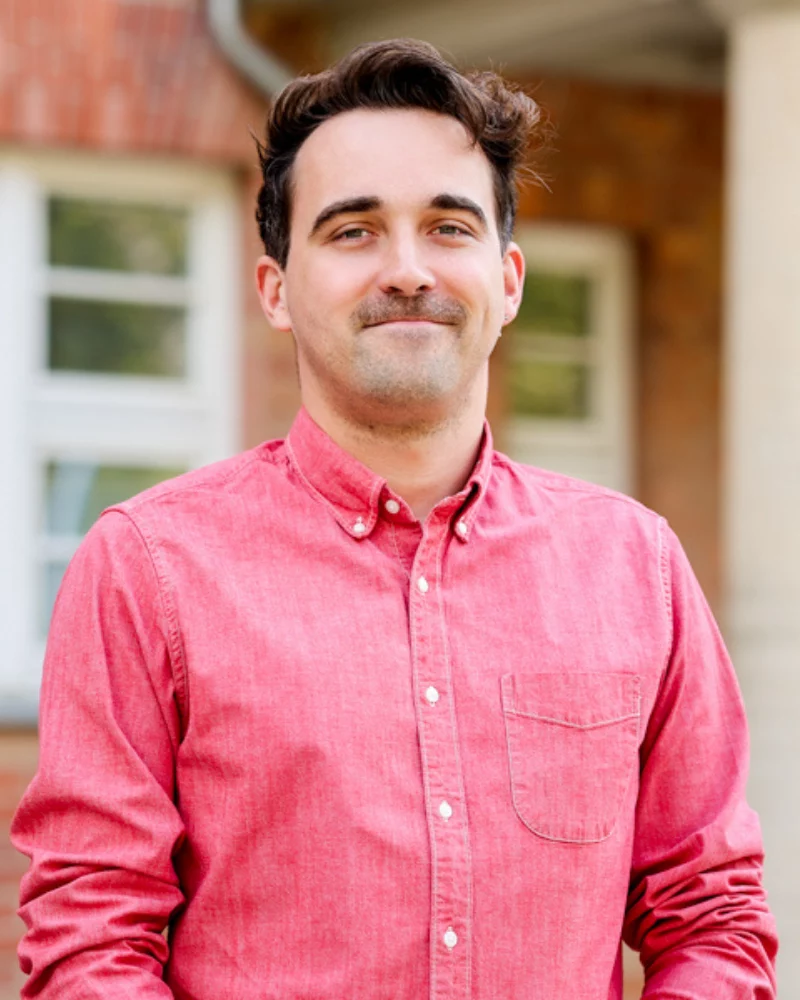
Dr. Mateusz W. Kucharczyk
Junior Leader of the Cancer Neurophysiology Research Group at Łukasiewicz – PORT
Mateusz earned Biotechnology degrees (BSc, MSc) from Jagiellonian University in Kraków. As a Marie Skłodowska-Curie trainee, he completed his PhD in Neuroscience (2019) at University College London, specialising in in vivo electrophysiology with Professor Anthony Dickenson and in vivo calcium imaging with Professor Stephen McMahon (King’s College London) to study cancer-induced bone pain.
Additional information
After learning optogenetics in Yves De Koninck Lab (Quebec, Canada), he worked as a PDRA in Dr Kirsty Bannister group (King’s College London), where he advanced opto- and chemogenetic techniques for studying descending modulatory circuits in health and disease. His group bridges Neuroscience with Oncology, aiming to comprehend neurogenic regulation of carcinogenesis and associated pain.
Employing state-of-the-art techniques (i.e., in vivo optical imaging, electrophysiology and optogenetics) they selectively sample and modulate activity of genetically defined neuronal populations and their effects on tumour biology. In this pursuit, the group aspires to forge innovative therapies for cancer and associated pain, rooted in a deep understanding of neuronal systems.
Dr. Mateusz W. Kucharczyk
Junior Leader of the Cancer Neurophysiology Research Group at Łukasiewicz – PORT
Mateusz earned Biotechnology degrees (BSc, MSc) from Jagiellonian University in Kraków. As a Marie Skłodowska-Curie trainee, he completed his PhD in Neuroscience (2019) at University College London, specialising in in vivo electrophysiology with Professor Anthony Dickenson and in vivo calcium imaging with Professor Stephen McMahon (King’s College London) to study cancer-induced bone pain.
Additional information
After learning optogenetics in Yves De Koninck Lab (Quebec, Canada), he worked as a PDRA in Dr Kirsty Bannister group (King’s College London), where he advanced opto- and chemogenetic techniques for studying descending modulatory circuits in health and disease. His group bridges Neuroscience with Oncology, aiming to comprehend neurogenic regulation of carcinogenesis and associated pain.
Employing state-of-the-art techniques (i.e., in vivo optical imaging, electrophysiology and optogenetics) they selectively sample and modulate activity of genetically defined neuronal populations and their effects on tumour biology. In this pursuit, the group aspires to forge innovative therapies for cancer and associated pain, rooted in a deep understanding of neuronal systems.
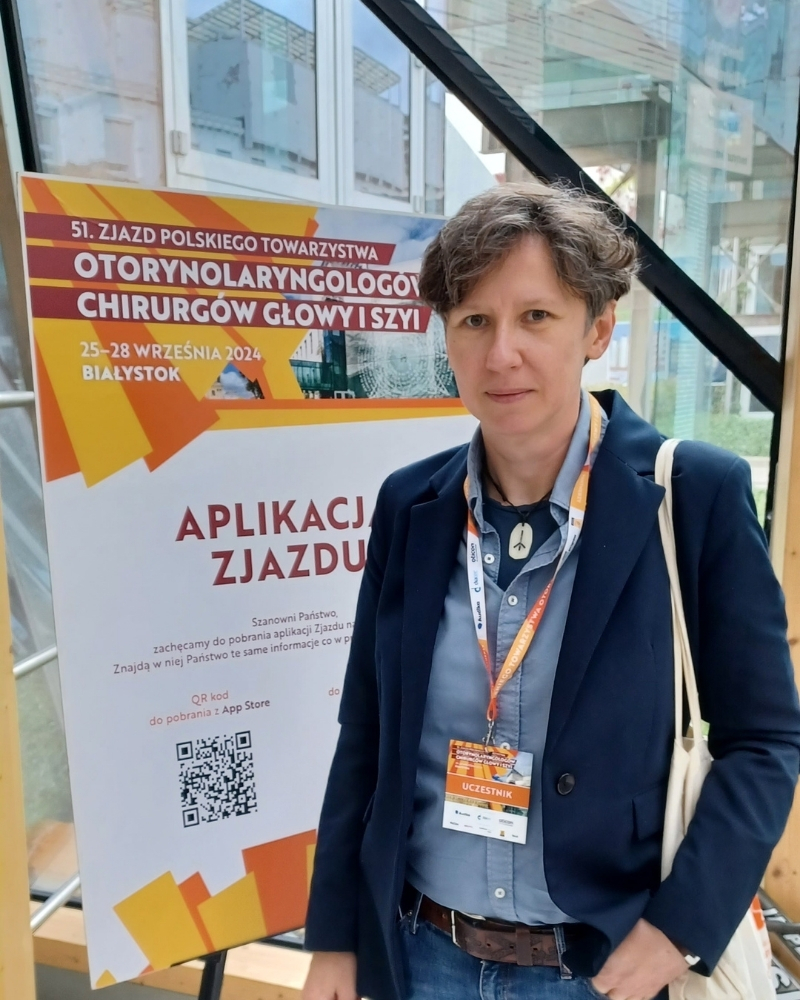
Dr. hab. Patrycja Gazińska
Senior Leader of the Biobank Research Group at Łukasiewicz – PORT
For many years, Patrycja managed histopathology research projects and services for multidisciplinary teams at Kings College in London. From 2019 to 2021, she led a Digital & Experimental Research Pathology unit at the Institute of Cancer Research in London specializing in digital pathology, and molecular pathology, with specific application to breast cancer research. This included collaborative work with Merck on novel biomarkers for patient treatment stratification.
Additional information
More recently she worked for AstraZeneca in Cambridge, applying computational pathology frameworks to oncology phase III clinical trials. Her primary research interest relates to breast cancer pathology and understanding how tumor microenvironment features predict clinical and biological aspects of this disease.
Dr. hab. Patrycja Gazińska
Senior Leader of the Biobank Research Group at Łukasiewicz – PORT
For many years, Patrycja managed histopathology research projects and services for multidisciplinary teams at Kings College in London. From 2019 to 2021, she led a Digital & Experimental Research Pathology unit at the Institute of Cancer Research in London specializing in digital pathology, and molecular pathology, with specific application to breast cancer research. This included collaborative work with Merck on novel biomarkers for patient treatment stratification.
Additional information
More recently she worked for AstraZeneca in Cambridge, applying computational pathology frameworks to oncology phase III clinical trials. Her primary research interest relates to breast cancer pathology and understanding how tumor microenvironment features predict clinical and biological aspects of this disease.