
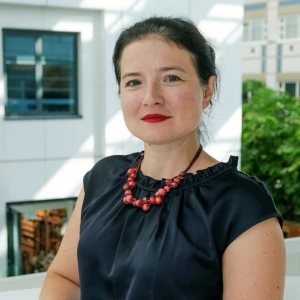
Aleksandra Badura
Title
Use of multi-parametric assays to capture sex- and environment-modifiers of behavioural phenotypes in autism mouse models
Abstract
Current phenotyping approaches for murine autism models often focus on one selected behavioral feature, making the translation onto a spectrum of autistic characteristics challenging. Furthermore, sex and environmental factors are rarely considered.
Here, we aimed to capture the full spectrum of behavioral manifestations in three autism mouse models to develop a “behavioral fingerprint” that takes environmental and sex influences under consideration. To this end, we employed a wide range of classical standardized behavioral tests; and two multi-parametric behavioral assays: the Live Mouse Tracker and Motion Sequencing (MoSeq), on male and female Shank2, Tsc1 and Purkinje cell specific-Tsc1 mutant mice raised in standard or enriched environments.
Our aim was to integrate our high dimensional data into one single platform to classify differences in all experimental groups along dimensions with maximum discriminative power. Multi-parametric behavioral assays enabled far more accurate classification of experimental groups compared to classical tests, and dimensionality reduction analysis demonstrated significant additional gains in classification accuracy, highlighting the presence of sex, environmental and genotype differences in our experimental groups. Together, our results provide a complete phenotypic description of all tested groups, suggesting multi-parametric assays can capture the entire spectrum of the heterogenous phenotype in autism mouse models.
Biography
Aleksandra Badura is an associate professor on Erasmus University Medical Center (EMC) in Rotterdam. She earned her Ph.D. in Neuroscience from Erasmus University in Rotterdam, where she studied the effects of afferent inputs on cerebellar activity and motor coordination. In 2012 she has started post-doctoral fellowship on Princeton University.
There, using intravital two-photon imaging, she discovered that granule cells receive signals predicting motor performance, leading to a shift in understanding cerebellar coding. She also developed advanced tools for monitoring neuronal activity via two-photon imaging. In 2015 she moved to the Netherlands Institute for Neuroscience in Amsterdam while continuing her role as a Visiting Research Collaborator at the Princeton Neuroscience Institute. Her research focused on the cerebellum’s role in autism spectrum disorder (ASD).
She demonstrated that cerebellar deficits are common in ASD and that disruptions to cerebellar activity during development cause abnormal cognitive and social behaviors. In June 2018, she was awarded a VIDI-ZonMw starting grant to investigate the cerebello-cerebral networks underlying shared autistic traits (source: https://pipgen.eu/supervisor/aleksandra-badura-esr7/).