
Mykhailo Batiuk
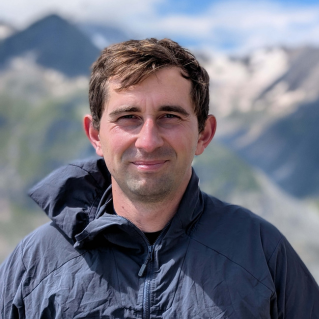
Title
Single-Cell insights into Schizophrenia and Traumatic Memory
Abstract
Understanding the molecular bases of mental diseases has long been hindered by limitations in experimental tools, such as bulk tissue analyses, which have restricted our ability to uncover cellular alterations and hence develop more effective therapies. However, recent breakthroughs in single-cell genomics have revolutionized the field, enabling us to dissect cell-type-specific changes in mental diseases like schizophrenia and post-traumatic stress disorder (PTSD) with unprecedented resolution.
This talk will primarily focus on my previous research of human schizophrenia, where I leveraged single-cell and spatial transcriptomics tools to elucidate the molecular and cellular pathology of the disorder. This analysis revealed general decrease in abundance of GABAergic neurons and concomitant increase in excitatory neurons, particularly pronounced in the upper layers of the prefrontal cortex, alongside transcriptional disruptions across various neuronal families. Notably, this involved the downregulation of energy metabolism and the upregulation of neurotransmission genes. These results suggest a general network impairment, most prominently within upper cortical layers, as a fundamental substrate underlying schizophrenia symptomatology.
In addition to my work on schizophrenia, I will also present my ongoing research of traumatic memory, a pivotal aspect of PTSD that still remains poorly understood. By building upon my expertise in single-cell genomics, I am employing tools from single-cell transcriptomics and epigenetics, including DNA methylation and 3D chromatin conformation analysis. Initial profiling has already uncovered transcriptional changes in specific cell subtypes associated with traumatic memory. Currently, I am augmenting these findings with comprehensive epigenetic profiling to further clarify the underlying transcriptional regulatory changes. This multifaceted approach aims to provide novel insights into the biology of traumatic memory and its role in PTSD, ultimately identifying novel molecular targets for future therapies.
Biography
Mykhailo Batiuk, since his PhD studies in Leuven, Belgium, has been interested in brain cellular heterogeneity. During his PhD, he developed a comprehensive approach relying on single-cell transcriptomics, which enabled him to identify five astrocyte subtypes in the mouse cortex and hippocampus. In his first post-doctoral fellowship, he applied his expertise in single-cell transcriptomics to identify neuronal perturbations in patients suffering from schizophrenia. Currently, Mykhailo is continuing his second post-doc at the École Polytechnique Fédérale de Lausanne, Switzerland. His current goal is to combine his experience with neuron-glia interactions, psychiatry, and single-cell genomics to research the epigenetic bases of traumatic memories.
Home-page: https://people.epfl.ch/mykhailo.batiuk