

AllergoOncology: Lessons Learned from the Allergy-Glioblastoma Connection
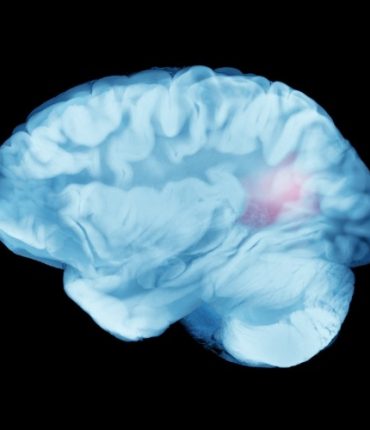
This presentation delves into the fascinating intersection of allergy and oncology, with a particular focus on glioblastoma. We will define the field of AllergoOncology, describing the current interface between allergology and oncology and discussing various pathways involved in the association between allergy and glioblastoma.
We will delve into our recent work demonstrating the protective role of allergic airway inflammation against glioblastoma progression in a murine model, and its implications on systemic and local immunity. Investigating how allergic inflammation delays glioblastoma progression in mice reveals intricate immune mechanisms, including the transcriptional reprogramming of microglia and the potentiation of local and adaptive systemic immunity (Doi: 10.1111/all.15545) .
Additionally, we will discuss our collaborative efforts between the European Academy of Allergy and Clinical Immunology (EAACI) and the European Association of Neuro-Oncology (EANO), aiming to refine the classification of allergic diseases and gliomas for enhanced research in AllergoOncology (Doi: 10.1111/all.15994).
Through these discussions, we aim to provide a comprehensive understanding of the AllergoOncology nexus, emphasizing the importance of preclinical models, biomarker research, and collaborative efforts in advancing our knowledge and improving patient outcomes in this intriguing field.
This presentation delves into the fascinating intersection of allergy and oncology, with a particular focus on glioblastoma. We will define the field of AllergoOncology, describing the current interface between allergology and oncology and discussing various pathways involved in the association between allergy and glioblastoma.
Show more
We will delve into our recent work demonstrating the protective role of allergic airway inflammation against glioblastoma progression in a murine model, and its implications on systemic and local immunity. Investigating how allergic inflammation delays glioblastoma progression in mice reveals intricate immune mechanisms, including the transcriptional reprogramming of microglia and the potentiation of local and adaptive systemic immunity (Doi: 10.1111/all.15545).
Additionally, we will discuss our collaborative efforts between the European Academy of Allergy and Clinical Immunology (EAACI) and the European Association of Neuro-Oncology (EANO), aiming to refine the classification of allergic diseases and gliomas for enhanced research in AllergoOncology (Doi: 10.1111/all.15994).
Through these discussions, we aim to provide a comprehensive understanding of the AllergoOncology nexus, emphasizing the importance of preclinical models, biomarker research, and collaborative efforts in advancing our knowledge and improving patient outcomes in this intriguing field.
Aurélie Poli
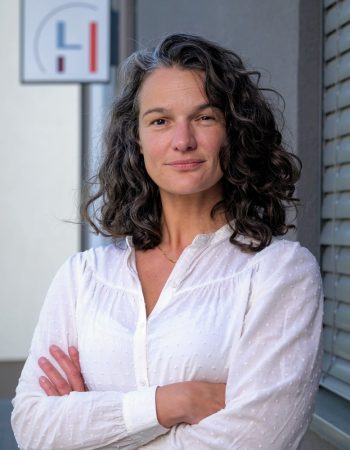
Highly dedicated and creative scientist, my ambition is to make breakthrough in deciphering how to circumvent glioma mediated local and systemic immunosuppression and to translate our discoveries into more effective immunotherapeutic strategy to support patients’ outcomes.
In 2005, after obtaining my Master’s Degree in Biotechnology, I started as a research engineer in Dr. J. Zimmer group at the CRP-Santé, Luxembourg, the predecessor to the Luxembourg Institute of Health, Luxembourg (LIH). The research group interest focused on the biology of Natural Killer (NK) cells in both the context of TAP deficiency and their regulation by neurotrophic factors. I developed a strong background in immunology with a specialization in NK cell biology.
More about Dr. Aurélie Poli.
Highly dedicated and creative scientist, my ambition is to make breakthrough in deciphering how to circumvent glioma mediated local and systemic immunosuppression and to translate our discoveries into more effective immunotherapeutic strategy to support patients’ outcomes.
Show more
In addition, through my active collaboration with multiple investigators, I extended my competences to the fields of Allergology, Oncology and Neuro-Immunology.
During this period as engineer, I developed a strong expertise in the functional and phenotypic assessment of primary immune cells from mouse, rat and human, especially for NK cells and myeloid cells; with a demonstrated expertise in using multi-colour flow cytometry and ex vivo co-culture systems. In 2010, I undertook a PhD thesis at the doctoral school of the University of Bergen in Norway, under the supervision of Prof. M. Chekenya, working on the development of a new immunotherapeutic strategy in rodent models for its future translation into the treatment of glioblastoma (GBM) patients.
These studies enabled me to acquire a strong background in the field of neuro-immunology as well as in brain tumour immunology. Since 2015, I have been working on implementing AllergoOncology research at LIH, with the support of both Prof. M. Ollert, Director of the Department of Infection and Immunity (DII), and Prof S. Niclou, Director of the Department of Cancer research (DoCR) at LIH. My research focuses on the understanding of the epidemiological association between glioma development and a pre-existing history of allergy.
Since February 2021, I was strategically repositioned from DII to the DoCR by integrating the Neuro-Immunology Group headed by Dr Alessandro Michelucci to conduct and support new as well as ongoing immune-related projects aimed at exploring and exploiting molecular pathways to promote and restore anti-tumoral features of myeloid cells in the context of GBM.
I am elected board member of the Working Group for AllergoOncology, from the European Academy of Allergy and Clinical Immunology (EAACI). Furthermore, since 2022, I am chairing a newly created international Task Force of the working group for AllergoOncology; sponsored by the EAACI, on the topic of : “AllergoOncology in the Era of Personalized, Stratified and Precision Medicine”.
Show more
In 2005, after obtaining my Master’s Degree in Biotechnology, I started as a research engineer in Dr. J. Zimmer group at the CRP-Santé, Luxembourg, the predecessor to the Luxembourg Institute of Health, Luxembourg (LIH). The research group interest focused on the biology of Natural Killer (NK) cells in both the context of TAP deficiency and their regulation by neurotrophic factors. I developed a strong background in immunology with a specialization in NK cell biology.
In addition, through my active collaboration with multiple investigators, I extended my competences to the fields of Allergology, Oncology and Neuro-Immunology.
During this period as engineer, I developed a strong expertise in the functional and phenotypic assessment of primary immune cells from mouse, rat and human, especially for NK cells and myeloid cells; with a demonstrated expertise in using multi-colour flow cytometry and ex vivo co-culture systems. In 2010, I undertook a PhD thesis at the doctoral school of the University of Bergen in Norway, under the supervision of Prof. M. Chekenya, working on the development of a new immunotherapeutic strategy in rodent models for its future translation into the treatment of glioblastoma (GBM) patients.
These studies enabled me to acquire a strong background in the field of neuro-immunology as well as in brain tumour immunology. Since 2015, I have been working on implementing AllergoOncology research at LIH, with the support of both Prof. M. Ollert, Director of the Department of Infection and Immunity (DII), and Prof S. Niclou, Director of the Department of Cancer research (DoCR) at LIH. My research focuses on the understanding of the epidemiological association between glioma development and a pre-existing history of allergy.
Since February 2021, I was strategically repositioned from DII to the DoCR by integrating the Neuro-Immunology Group headed by Dr Alessandro Michelucci to conduct and support new as well as ongoing immune-related projects aimed at exploring and exploiting molecular pathways to promote and restore anti-tumoral features of myeloid cells in the context of GBM.
I am elected board member of the Working Group for AllergoOncology, from the European Academy of Allergy and Clinical Immunology (EAACI). Furthermore, since 2022, I am chairing a newly created international Task Force of the working group for AllergoOncology; sponsored by the EAACI, on the topic of : “AllergoOncology in the Era of Personalized, Stratified and Precision Medicine”.
Read the Abstracts from Our Invited Speakers
Cancer Biology
- AllergoOncology: Lessons Learned from the Allergy-Glioblastoma Connection
Aurélie Poli, Luxembourg Institute of Health, LUXEMBOURG
- Cytotoxic NK Cells Impede Response to Checkpoint Immunotherapy in Melanoma with an Immune-Excluded Phenotype
Joanna Poźniak, KU Leuven, BELGIUM
- Inducing Immunogenic Tertiary Lymphoid Structures Across Cancer Types With Dendritic Cell Reprogramming
Camille Chatelain, Lund University, SWEDEN
- The Role of ILC2 in Tissue Homeostasis and Neoplasia
Tim Halim, Cancer Research UK Cambridge Institute, UNITED KINGDOM
Cancer Neuroscience
- Latent Neuropathy in Colorectal Cancer: Implications for Cancer Survivorship
Andrew Shepherd, University of Texas MD Anderson Cancer Center, USA
- Remodelling of the Bone Microenvironment During Cancer Infiltration: Insights from Multiplex Imaging and Spatial Transcriptomics
Christina Møller Andreasen, University of Southern Denmark, DENMARK
- Enteric Nervous System-Derived VIP Restrains Differentiation of LGR5+ Stem Cells Towards the Secretory Lineage Impeding Type 2 Immune Programs
Christoph Klose, Charité – Berlin University Medicine, GERMANY
Cancer Therapy
- Targeting the Dark Matter of Cancer with AI-Designed Mini Binder
Tobias Bald, University of Bonn, GERMANY
- Engineering Nanomedicines for Targeted Neuroimmune Modulation
Helena Florindo, University of Lisbon, PORTUGAL
- Potentiating Immunotherapy of Urological Cancers with Oncolytic Viruses
Gabri van der Pluijm, Leiden University Medical Center, THE NETHERLANDS
- Strategic Priorities in Cancer Therapy: Navigating the 2026 Cancer Mission Calls
Industry Contact Point, Łukasiewicz – PORT, POLAND
- Cancer Neuroscience of Brain TumorsKEYNOTE SPEAKER
Frank Winkler, Universitätsklinik Heidelberg, GERMANY
- Spatial Reprogramming of Immune Surveillance in Breast Cancer: From Immune Control to Immune Failure
Sheeba Irshad, King’s College London, UNITED KINGDOM
- The War Against Glioblastoma Needs More Than Standard of Care
Stefaan Van Gool, IOZK Immun-Onkologisches Zentrum Köln, GERMANY
- Uncovering the Spatial Regulation of γδ T Cells: Toward Receptor-Guided Immunotherapy
Jürgen Kuball, University Medical Center Utrecht, THE NETHERLANDS
- Latest Advances in CAR‑T Therapy in Lymphoma: Where Are We and Where Are We Going?
Jarosław Dybko, Lower Silesian Oncology Center in Wroclaw, POLAND
- Expanding CAR Targets to Non Protein Antigens
Sébastien Wälchli, Oslo University Hospital, NORWAY
- Advancing BIA-ALCL Research Through a UK – PORT Alliance — From Biobanking to Immune Discovery
Helen Kakkassery, King’s College London, UNITED KINGDOM
PORT for Business — Company Session
- From Sample to Insight: Advanced Analytics for Oncology Research
Malwina Woźniak, Łukasiewicz – PORT, POLAND
- Beyond glioblastoma — WPD Pharmaceuticals
Mariusz Olejniczak, WPD Pharmaceuticals, POLAND
- The Development of USP7 Inhibitor for Cancer Immunotherapy
Zbigniew Zasłona, Molecule, POLAND
- Leveraging Cancer Biology for Therapeutic Innovation: Clinical and Discovery Advances at Ryvu
Milena Mazan, Ryvu Therapeutics, POLAND
- TBC
Marek Kudła, Ardigen, POLAND
- TBC
Artur Wnorowski, Biotechna, POLAND
- Development of Biological Drugs for Oncological Indications at Mabion
Jakub Knurek, Mabion, POLAND