

Transforming Multimodal Complexity into Precision Oncology Insights
The clinical success of oncology therapies rests on ability to look beyond single biomarkers to decipher the complex interplay between patient genetics, the tumor microenvironment, and systemic immune responses. As the volume of multi-omic and clinical data grows, the challenge lies in converting this vast complexity into actionable clinical insights.
Ardigen bridges this gap by integrating advanced machine learning approaches with deep domain expertise in immunology and data science. Our approach transforms disparate, high-dimensional datasets into reliable, interpretable biomarkers and patient stratification models.
The clinical success of oncology therapies rests on ability to look beyond single biomarkers to decipher the complex interplay between patient genetics, the tumor microenvironment, and systemic immune responses. As the volume of multi-omic and clinical data grows, the challenge lies in converting this vast complexity into actionable clinical insights.
Ardigen bridges this gap by integrating advanced machine learning approaches with deep domain expertise in immunology and data science. Our approach transforms disparate, high-dimensional datasets into reliable, interpretable biomarkers and patient stratification models.
Show more
Multimodal Biomarker Discovery
In oncology, relying on single-metric biomarkers often misses the nuanced reality of patient response. By integrating heterogeneous datasets into cohesive prediction models we can shift the focus from isolated variables to complex, multimodal signatures to consistently outperform standard clinical benchmarks, enabling more accurate patient stratification and superior survival prediction.
Mechanism-Driven Insights for Drug Resistance
We utilize explainable AI to uncover the hidden drivers of treatment resistance. By deconvoluting the complex immune landscape and mapping subtle molecular patterns, we help our partners identify novel therapeutic combinations designed to restore anti-tumor immunity and bypass resistance pathways.
Scalable AI Infrastructure for R&D Acceleration
Through robust, generalized machine learning frameworks, we extract biological insights from massive, heterogeneous datasets enabling rapid biomarker discovery across a wide range of indications, significantly de-risking the transition from early-stage research to clinic-ready diagnostic development.
By turning complex, noisy biological data into interpretable, scientifically grounded insights, Ardigen empowers our partners to better navigate the complexities of modern oncology.
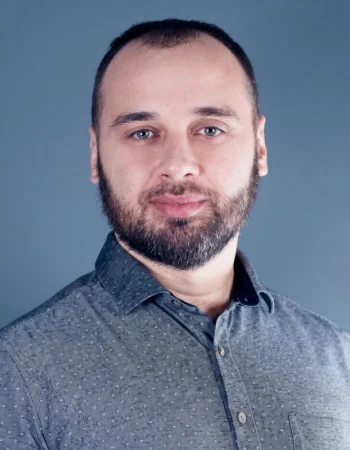
Marek Kudła
Marek Kudła, PhD, serves as the Director of Bioinformatics at Ardigen, where he provides strategic leadership at the intersection of biological research and computational data analysis. His journey began at the University of Warsaw, leading him to a PhD at Cold Spring Harbor Laboratory and research at UC Berkeley, where he refined his expertise in genomics and transcriptomics.
With a career defined by bridging the gap between complex biological data and drug discovery, Marek now oversees high-performing, interdisciplinary teams of bioinformaticians, software engineers, and data scientists, focusing on the collaborative path from experimental insight to therapeutic impact.
More about Dr. Marek Kudła.
Marek Kudła, PhD, serves as the Director of Bioinformatics at Ardigen, where he provides strategic leadership at the intersection of biological research and computational data analysis. His journey began at the University of Warsaw, leading him to a PhD at Cold Spring Harbor Laboratory and research at UC Berkeley, where he refined his expertise in genomics and transcriptomics.
Show more
With a career defined by bridging the gap between complex biological data and drug discovery, Marek now oversees high-performing, interdisciplinary teams of bioinformaticians, software engineers, and data scientists, focusing on the collaborative path from experimental insight to therapeutic impact.
Read the Abstracts from Our Invited Speakers
Cancer Biology
- AllergoOncology: Lessons Learned from the Allergy-Glioblastoma Connection
Aurélie Poli, Luxembourg Institute of Health, LUXEMBOURG
- Cytotoxic NK Cells Impede Response to Checkpoint Immunotherapy in Melanoma with an Immune-Excluded Phenotype
Joanna Poźniak, KU Leuven, BELGIUM
- Inducing Immunogenic Tertiary Lymphoid Structures Across Cancer Types With Dendritic Cell Reprogramming
Camille Chatelain, Lund University, SWEDEN
- The Role of ILC2 in Tissue Homeostasis and Neoplasia
Tim Halim, Cancer Research UK Cambridge Institute, UNITED KINGDOM
Cancer Neuroscience
- Latent Neuropathy in Colorectal Cancer: Implications for Cancer Survivorship
Andrew Shepherd, University of Texas MD Anderson Cancer Center, USA
- Remodelling of the Bone Microenvironment During Cancer Infiltration: Insights from Multiplex Imaging and Spatial Transcriptomics
Christina Møller Andreasen, University of Southern Denmark, DENMARK
- Enteric Nervous System-Derived VIP Restrains Differentiation of LGR5+ Stem Cells Towards the Secretory Lineage Impeding Type 2 Immune Programs
Christoph Klose, Charité – Berlin University Medicine, GERMANY
Cancer Therapy
- Targeting the Dark Matter of Cancer with AI-Designed Mini Binder
Tobias Bald, University of Bonn, GERMANY
- Engineering Nanomedicines for Targeted Neuroimmune Modulation
Helena Florindo, University of Lisbon, PORTUGAL
- Potentiating Immunotherapy of Urological Cancers with Oncolytic Viruses
Gabri van der Pluijm, Leiden University Medical Center, THE NETHERLANDS
- Strategic Priorities in Cancer Therapy: Navigating the 2026 Cancer Mission Calls
Industry Contact Point, Łukasiewicz – PORT, POLAND
- Cancer Neuroscience of Brain TumorsKEYNOTE SPEAKER
Frank Winkler, Universitätsklinik Heidelberg, GERMANY
- Spatial Reprogramming of Immune Surveillance in Breast Cancer: From Immune Control to Immune Failure
Sheeba Irshad, King’s College London, UNITED KINGDOM
- The War Against Glioblastoma Needs More Than Standard of Care
Stefaan Van Gool, IOZK Immun-Onkologisches Zentrum Köln, GERMANY
- Uncovering the Spatial Regulation of γδ T Cells: Toward Receptor-Guided Immunotherapy
Jürgen Kuball, University Medical Center Utrecht, THE NETHERLANDS
- Latest Advances in CAR‑T Therapy in Lymphoma: Where Are We and Where Are We Going?
Jarosław Dybko, Lower Silesian Oncology Center in Wroclaw, POLAND
- Expanding CAR Targets to Non Protein Antigens
Sébastien Wälchli, Oslo University Hospital, NORWAY
- Advancing BIA-ALCL Research Through a UK – PORT Alliance — From Biobanking to Immune Discovery
Helen Kakkassery, King’s College London, UNITED KINGDOM
PORT for Business — Company Session
- From Sample to Insight: Advanced Analytics for Oncology Research
Malwina Woźniak, Łukasiewicz – PORT, POLAND
- Beyond glioblastoma — WPD Pharmaceuticals
Marek Sipowicz, WPD Pharmaceuticals, POLAND
- The Development of USP7 Inhibitor for Cancer Immunotherapy
Zbigniew Zasłona, Molecule, POLAND
- Leveraging Cancer Biology for Therapeutic Innovation: Clinical and Discovery Advances at Ryvu
Milena Mazan, Ryvu Therapeutics, POLAND
- Transforming Multimodal Complexity into Precision Oncology Insights
Marek Kudła, Ardigen, POLAND
- TBC
Artur Wnorowski, Biotechna, POLAND
- Development of Biological Drugs for Oncological Indications at Mabion
Jakub Knurek, Mabion, POLAND